
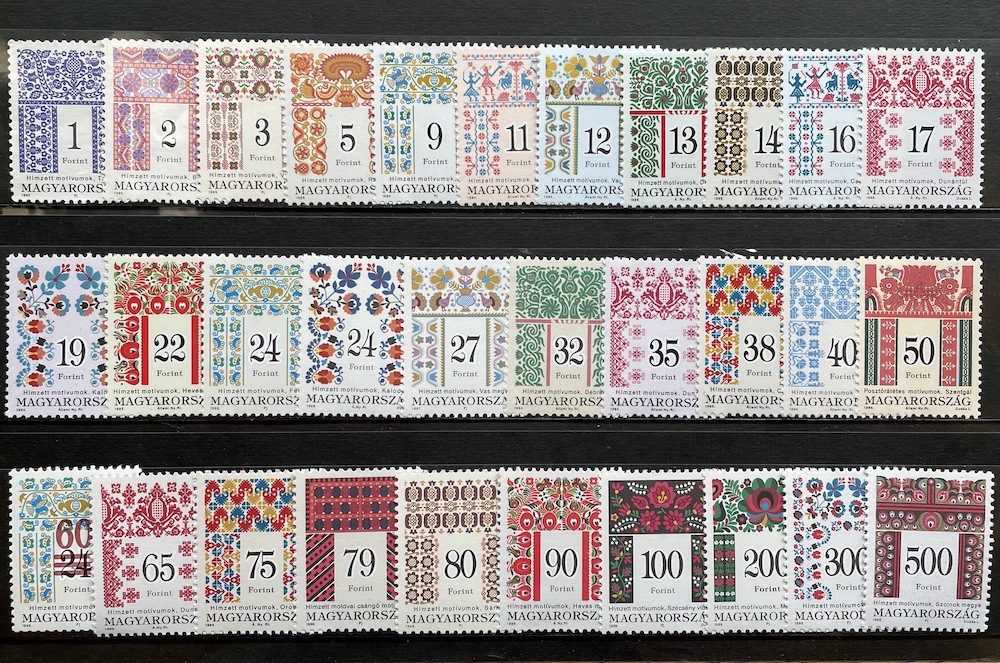
Today I’d like to introduce a series of stamps issued by Hungary in the 1990s, featuring traditional embroidery motifs.
I first came across these stamps about 20 years ago. I happened to find one at a stamp dealer’s shop, then another, and another… The more I looked at them, the more charming they seemed, and over a long time they became one of my favorite series to collect.
I believe the 31 stamps in the photo above make up the complete set.
Overview of the Hungarian Embroidery Motif Stamps
What the Hungarian Words on the Stamps Mean
MAGYARORSZÁG
The most prominent word on the stamps is “MAGYARORSZÁG.”
“Magyar” means Hungarian, and “ország” means country — so Magyarország simply means Hungary.
Hímzett motívumok
“Hímzett” means embroidered and “motívumok” means motifs — so this reads “embroidered motifs.”
Place Names
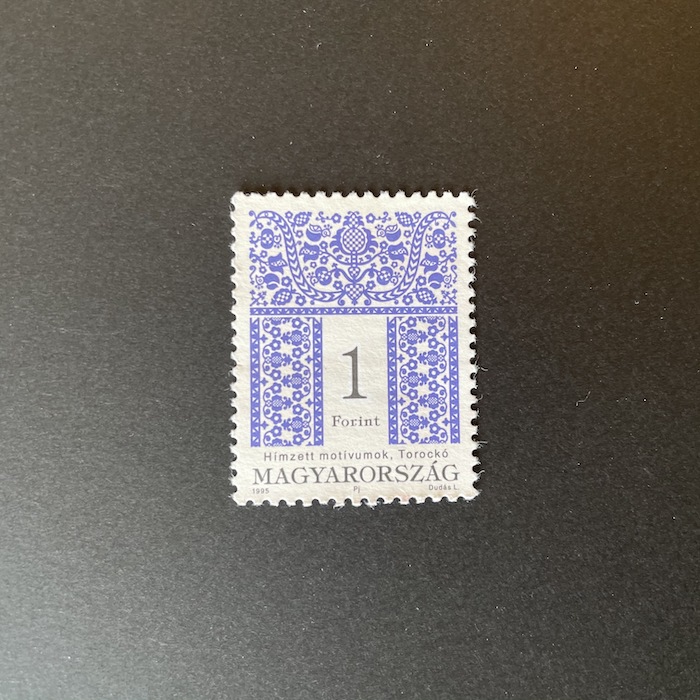
The 1 Ft stamp above reads “Trocko.” This is a place name, and the motif is an embroidery pattern handed down in that area.
Some stamps include the word “megye,” which means county.
Dudás L.
Since “Dudás L.” also appears on other Hungarian stamps of the same period, I guessed it was the designer’s name.
“Dudás L.” is the designer László Dudás.
(Thank you to a Postio Marche customer for this information!)
Forint
The forint is Hungary’s currency. Hungary is a member of the EU but does not use the euro. The currency symbol is Ft and the ISO code is HUF.
As of 2021, 1 forint was worth about 0.38 Japanese yen; twenty years ago it was around 0.5 yen.
So 16 forints is about 6 yen, and the highest face value, 500 forints, is about 190 yen.
Looking at Hungary’s new stamps today, face values of 200–500 forints seem to be common.
(Postio Marche sells several of these embroidery stamps. Please note that mint stamps are priced to reflect our acquisition costs, so they are more expensive than their face value.)
Á.Ny.Rt. / Pj / Állami Ny.Rt.
I was still researching the meaning of these three inscriptions at the bottom center of the stamps.
Update, 17 December 2022
Á.Ny.Rt. = Állami Nyomda Nyrt.
In English: State Printing House Plc. (Plc stands for Public Limited Company).
(Information from a customer)
Years of Issue
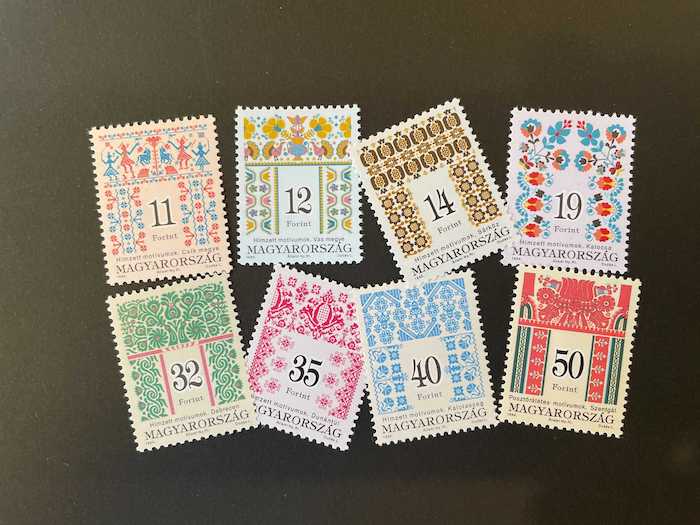
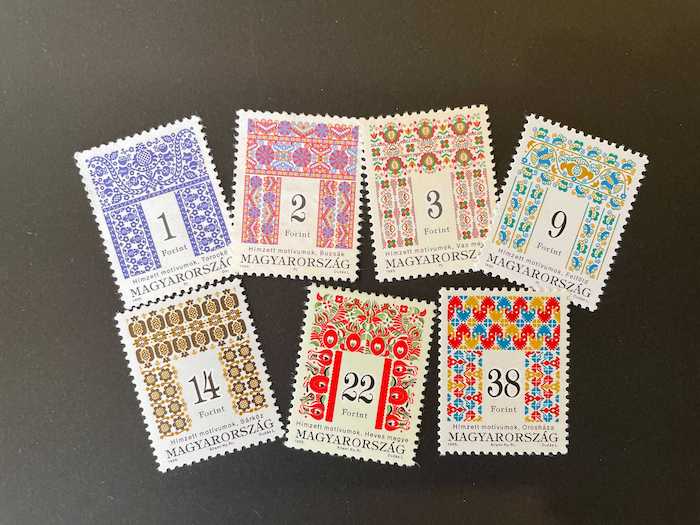
The year of issue is printed small at the lower left of each stamp. According to these, the series was issued over six years, from 1994 to 1999.
| Year | Stamps | Face values (Ft) |
| 1994 | 8 | 11, 12, 14, 19, 32, 35, 40, 50 |
| 1995 | 7 | 1, 2, 3, 9, 14, 22, 38 |
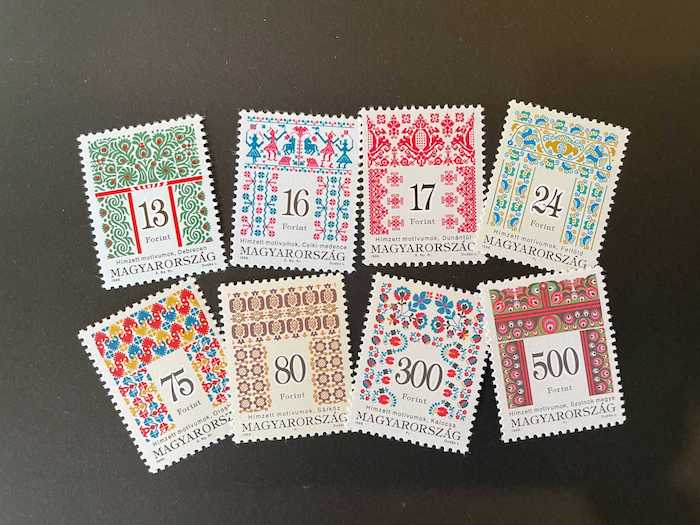
| 1996 | 8 | 13, 16, 17, 24a, 75, 80, 300, 500 |
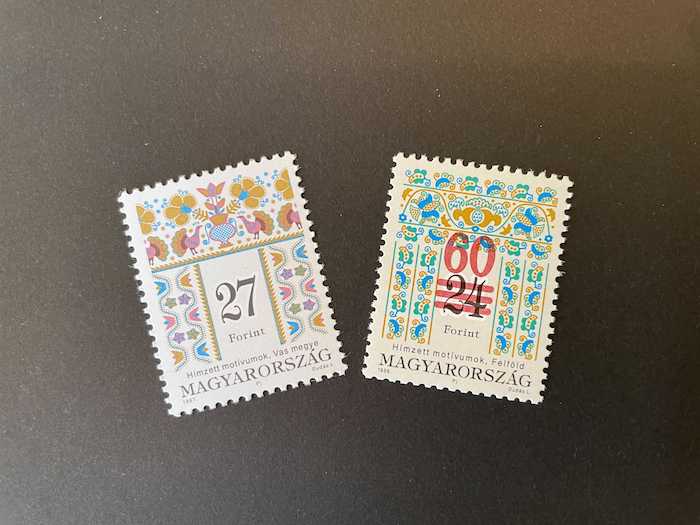
| 1997 | 2 | 27, 60 (surcharged on 24) |
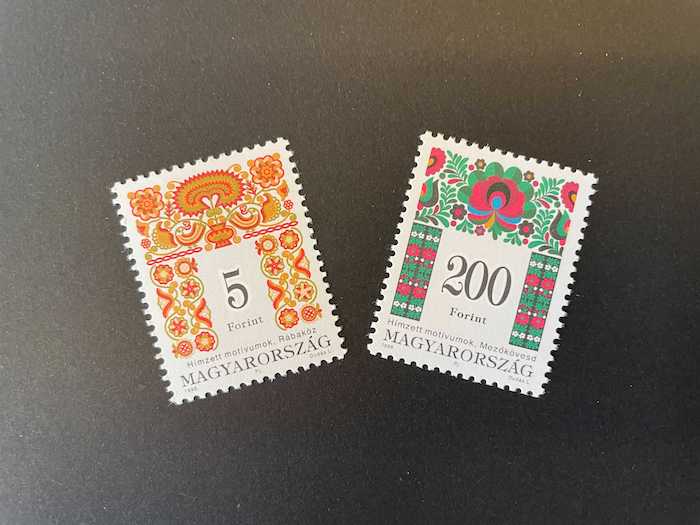
| 1998 | 2 | 5, 200 |
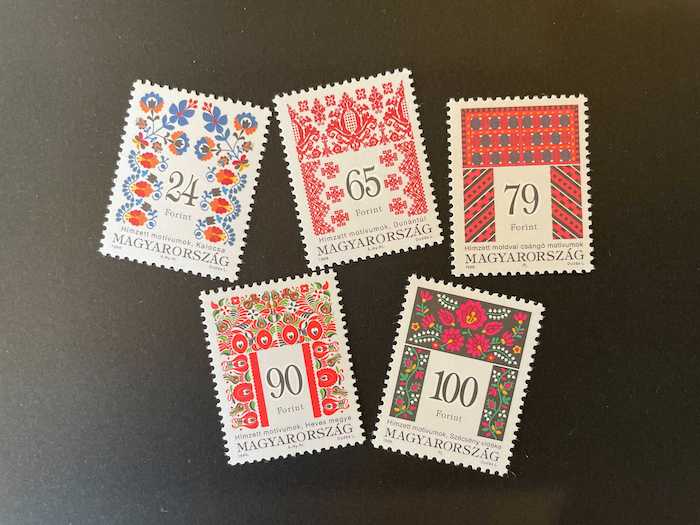
| 1999 | 5 | 24b, 65, 79, 90, 100 |
Most of the stamps were issued between 1994 and 1996.
The Designs, in Order of Face Value
Here they are, in order of face value!
1 Forint
Issued 1995: an embroidery motif from Trocko.
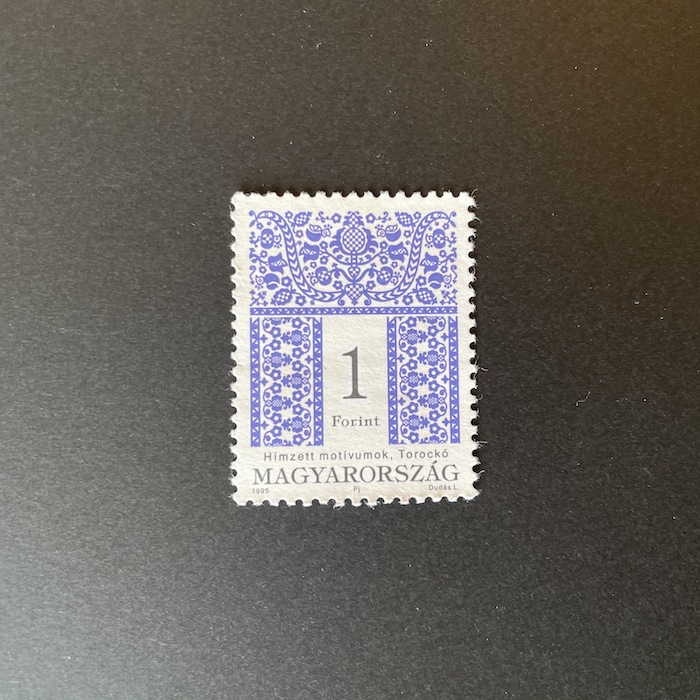
2 Forint
Issued 1995: an embroidery motif from Buzsák.
Buzsák is a village where embroidery has been handed down as a traditional craft. I once saw an old book of embroidery patterns titled Buzsáki hímzésminta-kincs (“Treasury of Buzsák Embroidery Patterns”).
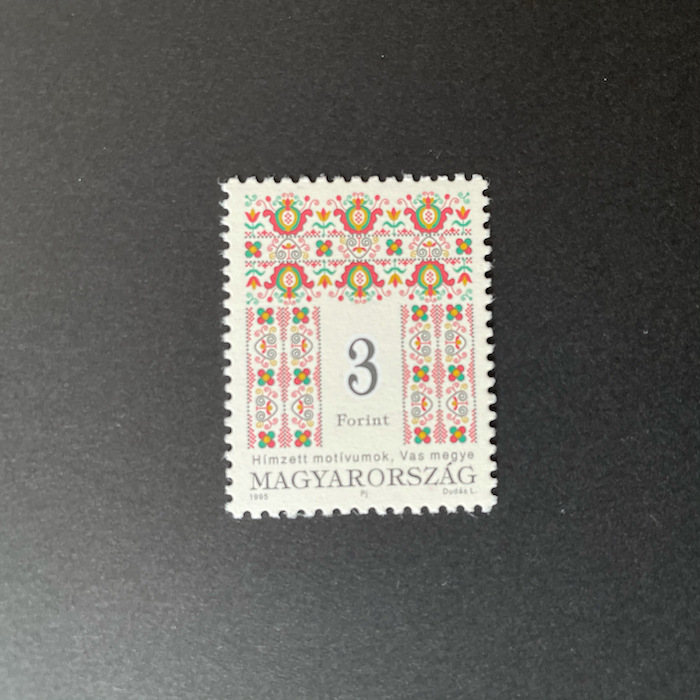
3 Forint
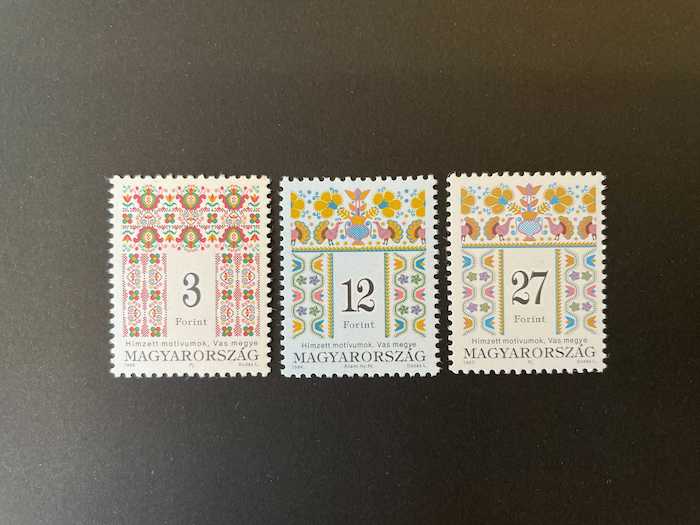
Issued 1995: an embroidery motif from Vas. Vas is Hungary’s westernmost county, on the border with Slovenia.
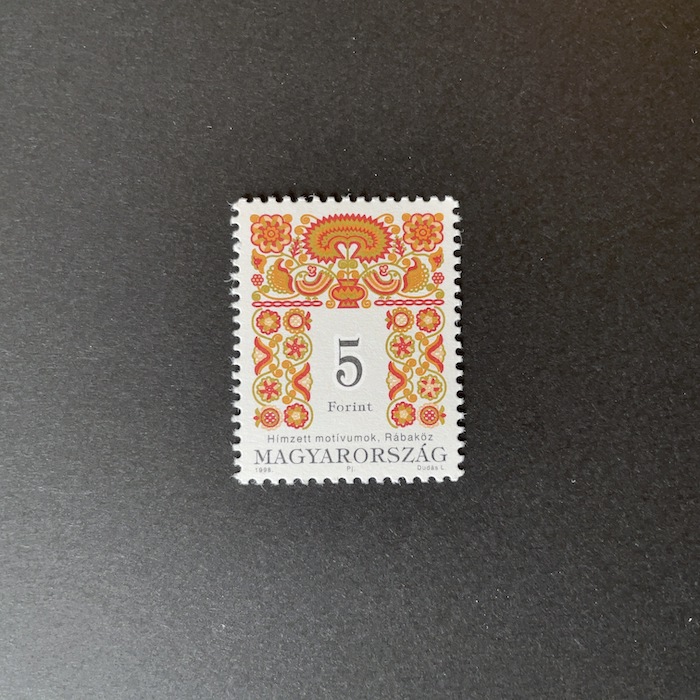
5 Forint
Issued 1998: an embroidery motif from Rábaköz. In 1998, only the 5 Ft and 200 Ft embroidery stamps were issued.
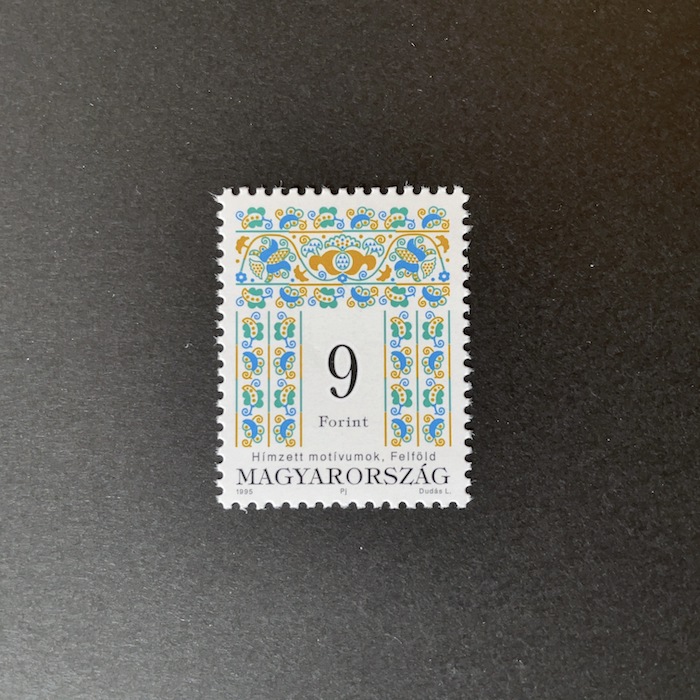
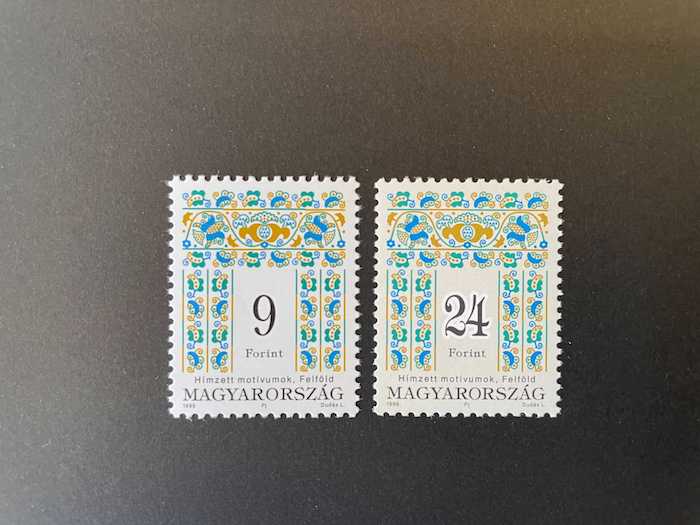
9 Forint
Issued 1995: an embroidery motif from Felföld, the northern region.
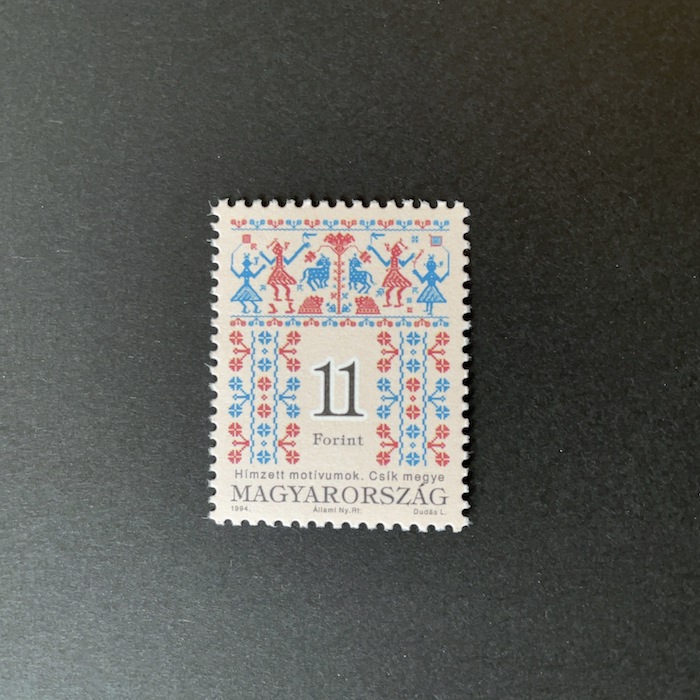
11 Forint
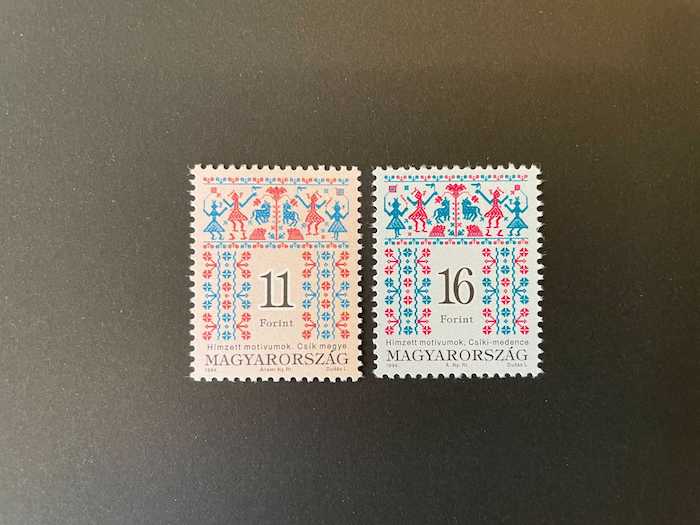
Issued 1994: an embroidery motif from Csík.
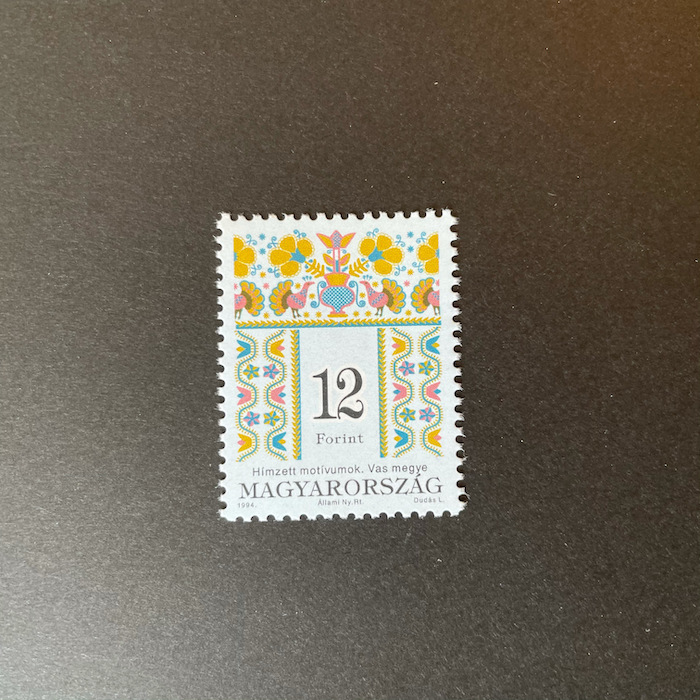
12 Forint
Issued 1994: an embroidery motif from Vas.
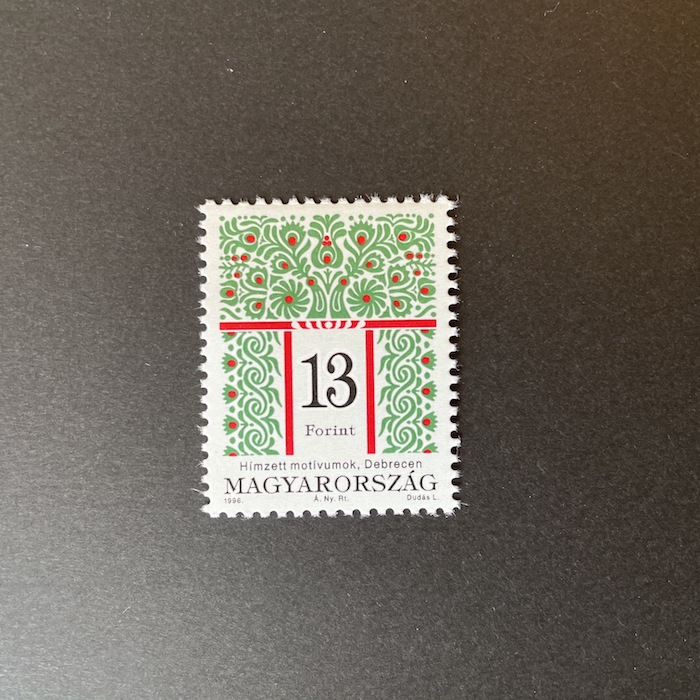
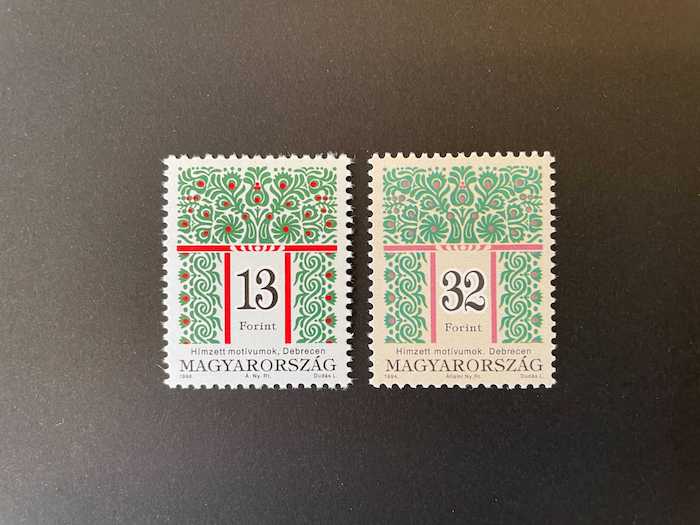
13 Forint
Issued 1996: an embroidery motif from Debrecen, Hungary’s second-largest city after Budapest.
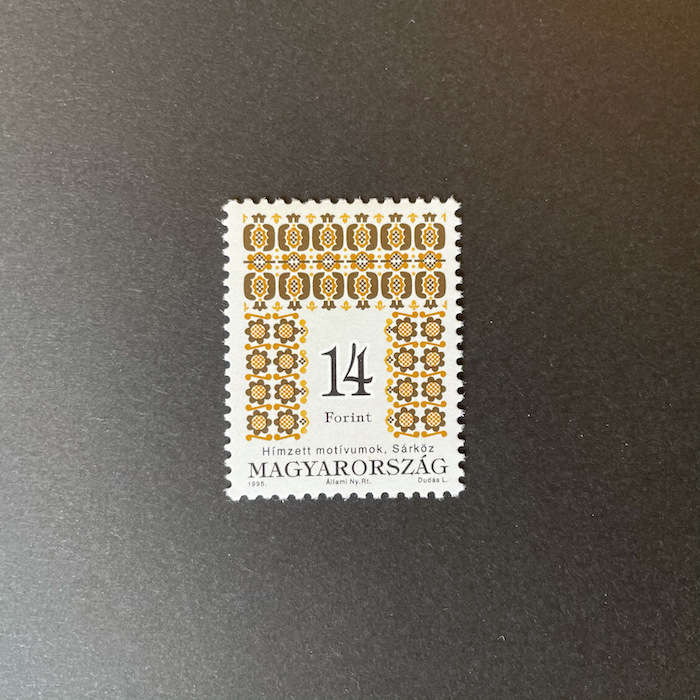
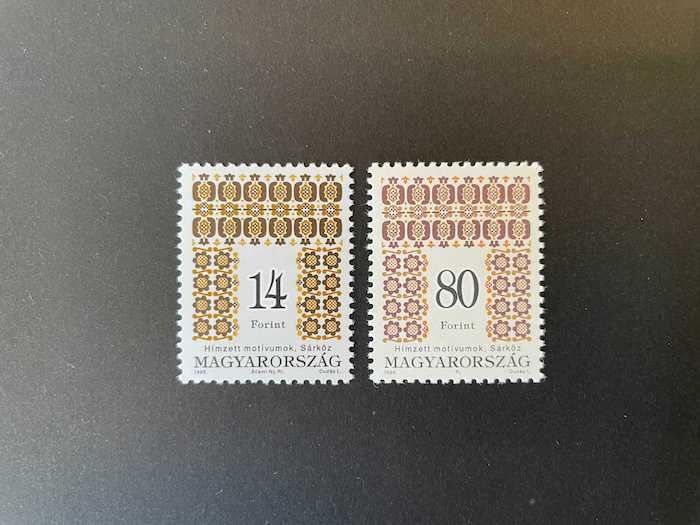
14 Forint
Issued 1994: an embroidery motif from Sárköz, an area in Tolna County famous for its traditional embroidery. This motif reminds me of retro Japanese designs from the Showa era!
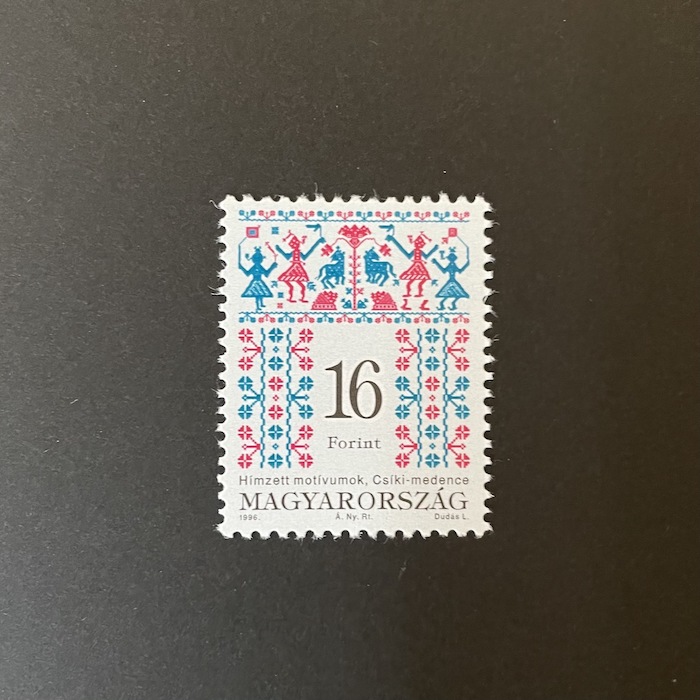
16 Forint
Issued 1996: an embroidery motif from Csík.
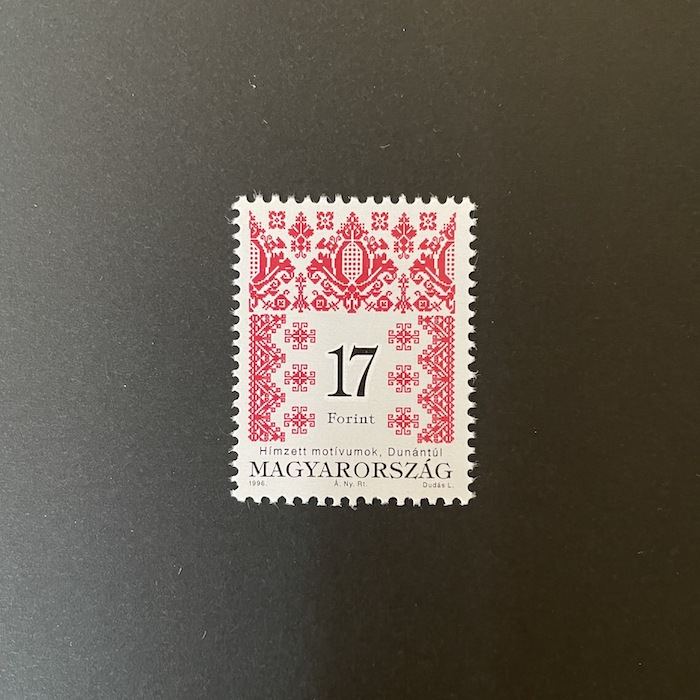
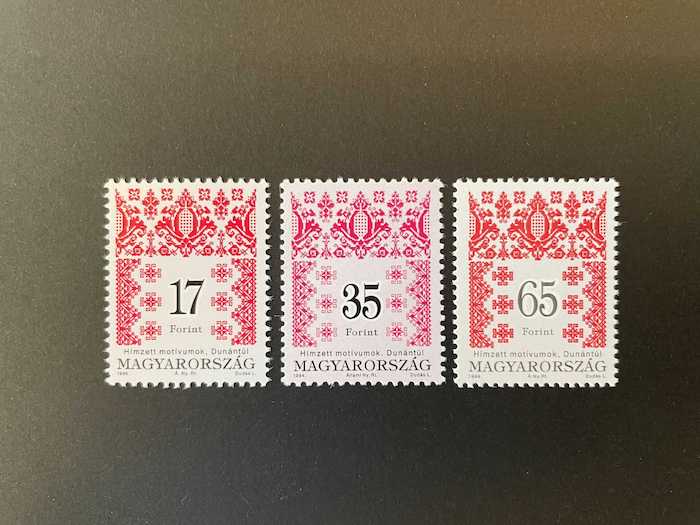
17 Forint
Issued 1996: an embroidery motif from Dunántúl (Transdanubia).
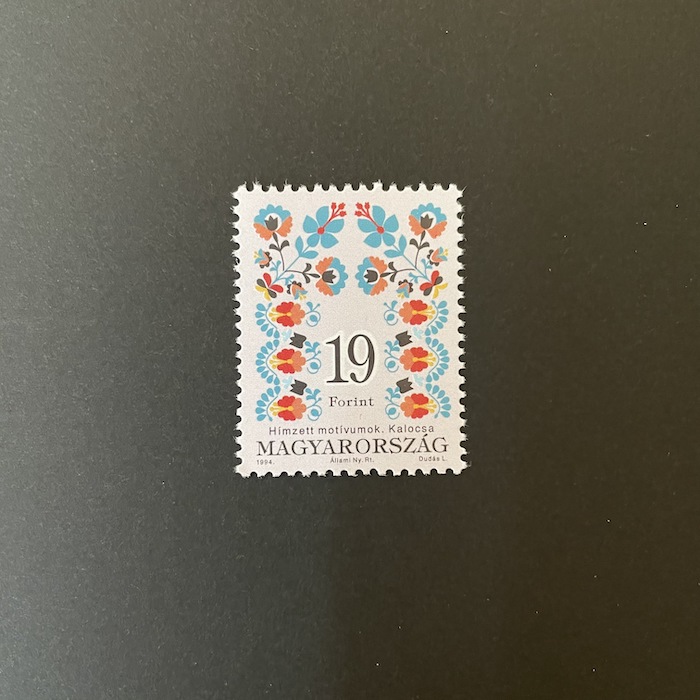
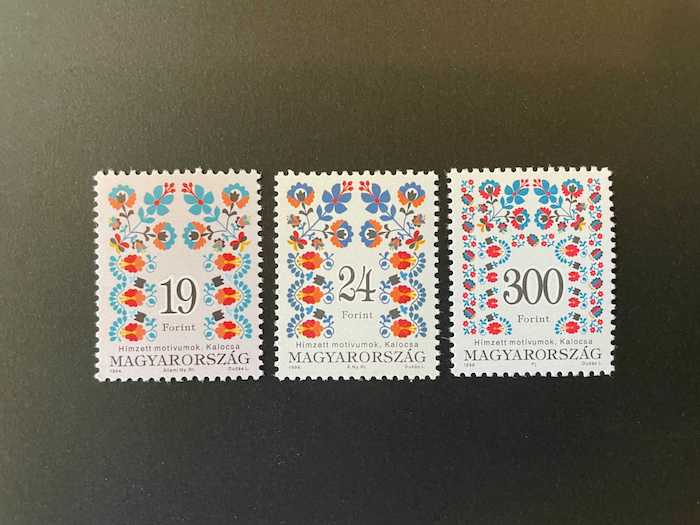
19 Forint
Issued 1994: an embroidery motif from Kalocsa. Kalocsa is one of Hungary’s most historic towns, and it is famous for Kalocsa embroidery.
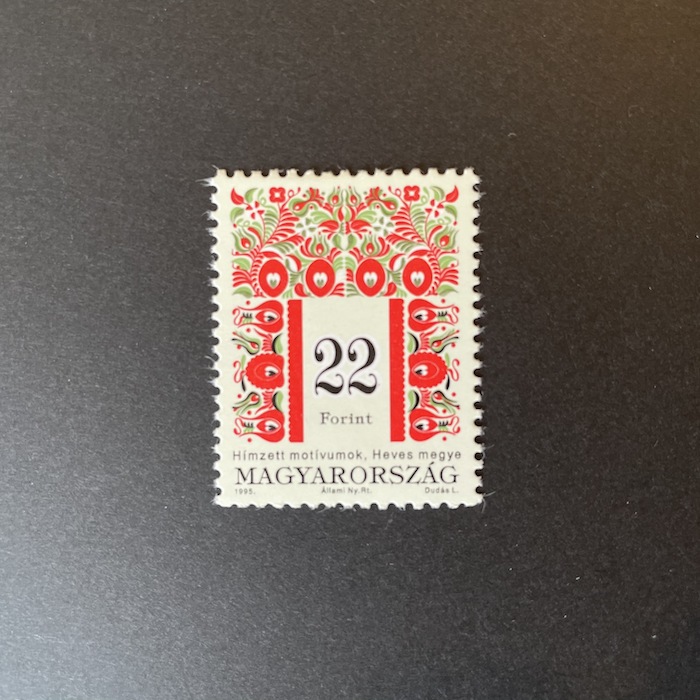
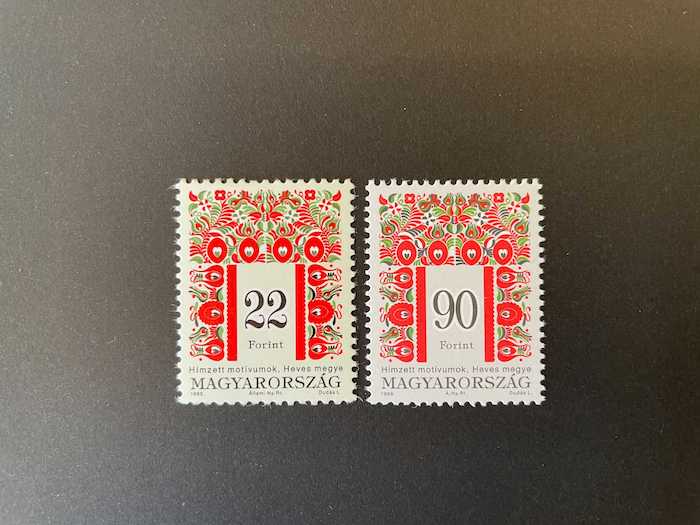
22 Forint
Issued 1995: an embroidery motif from Heves County, which is also known for its embroidery and weaving.
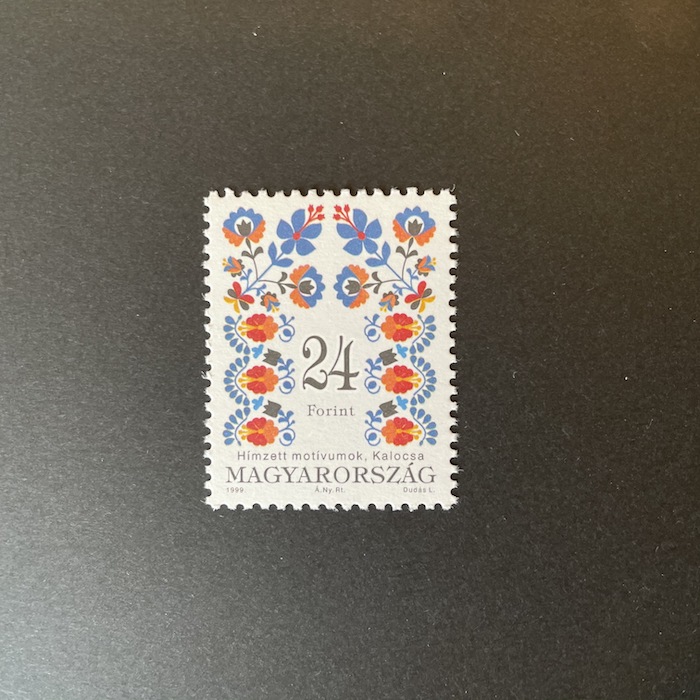
24 Forint
Issued 1999: an embroidery motif from Kalocsa.
It uses the same Kalocsa motif as the 19 Ft, but the colors, the position of the face value and the paper are slightly different.
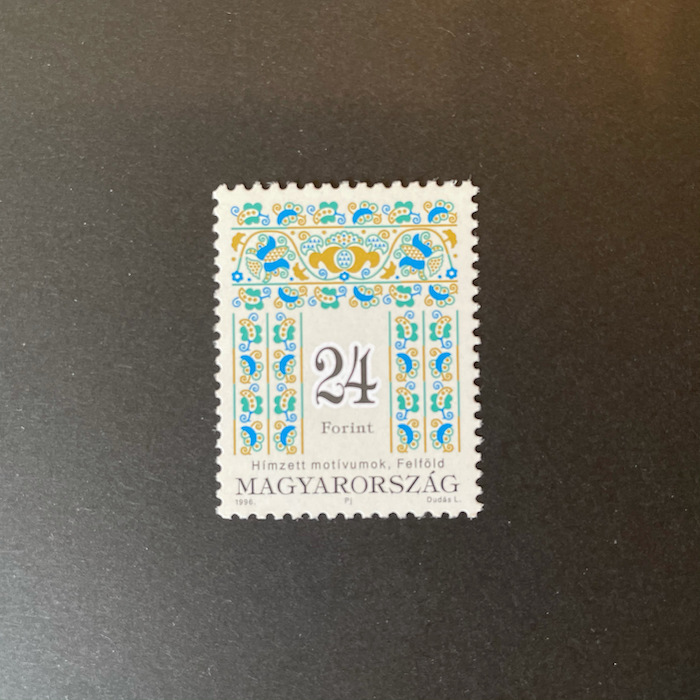
24 Forint
Issued 1996: an embroidery motif from Felföld, the northern region. The 24 Ft value was issued twice; this is the 1996 version.
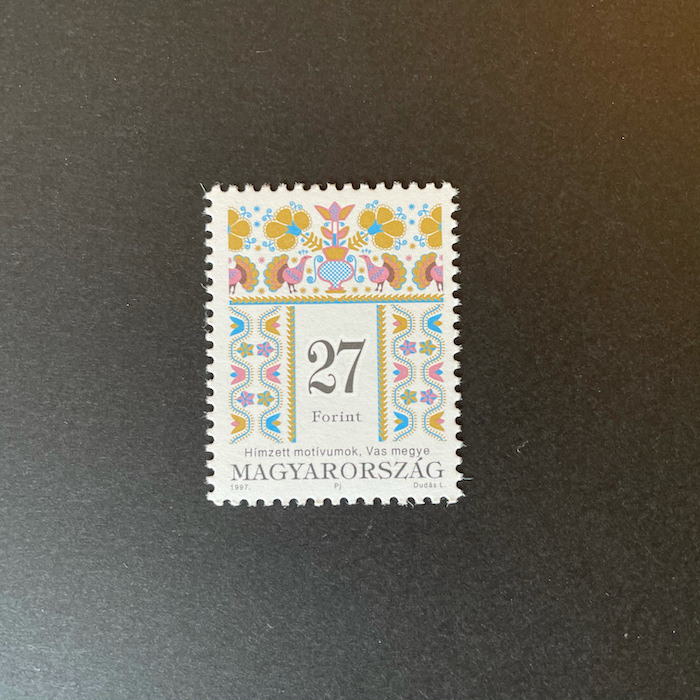
27 Forint
Issued 1997: an embroidery motif from Vas. Vas appears three times, on the 3 Ft, 12 Ft and 27 Ft.
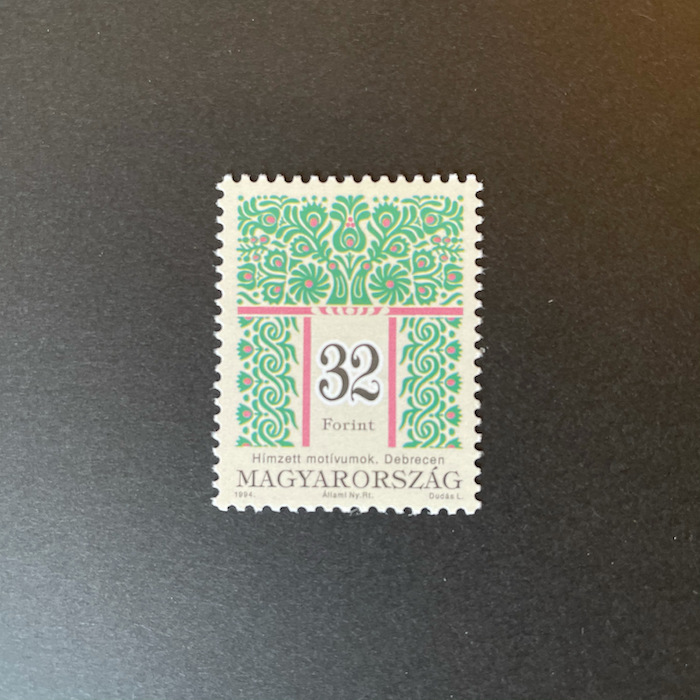
32 Forint
Issued 1994: an embroidery motif from Debrecen. Debrecen appears twice, on the 13 Ft and 32 Ft. The pattern is the same, but the 32 Ft has an ivory background that gives it a more muted look.
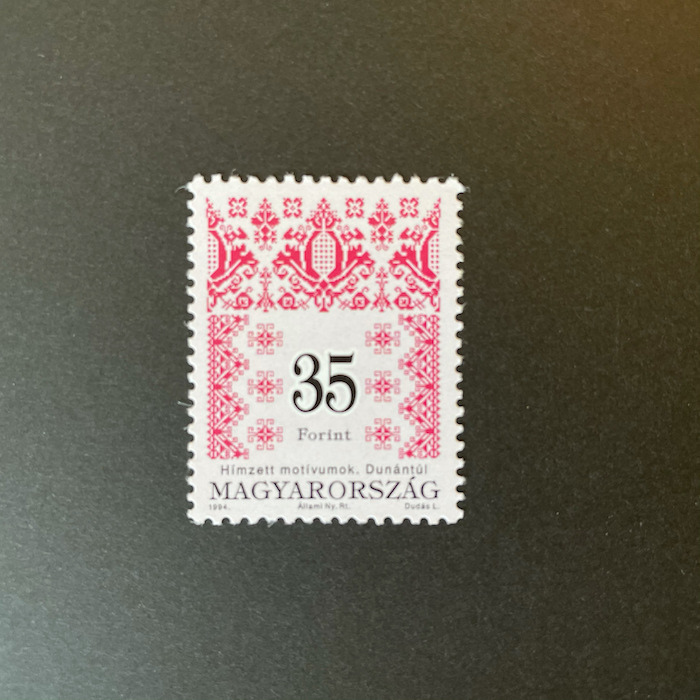
35 Forint
Issued 1994: an embroidery motif from Dunántúl (Transdanubia).
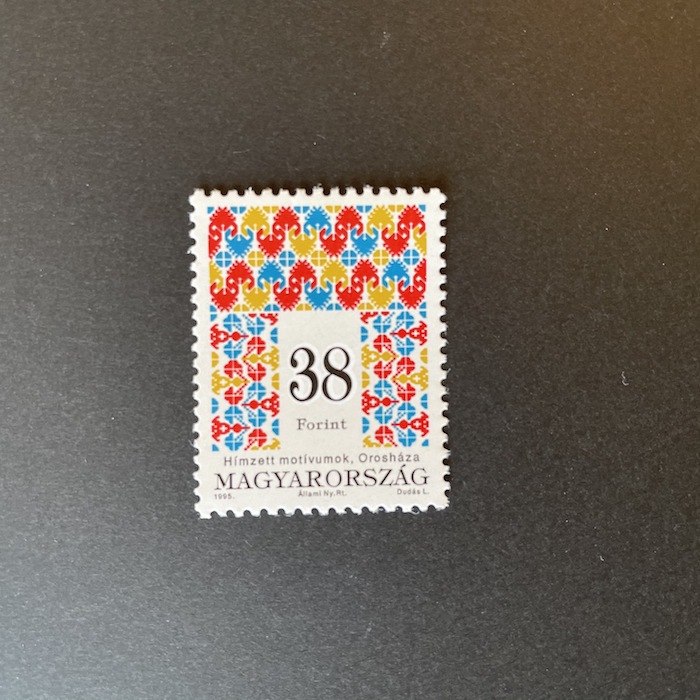
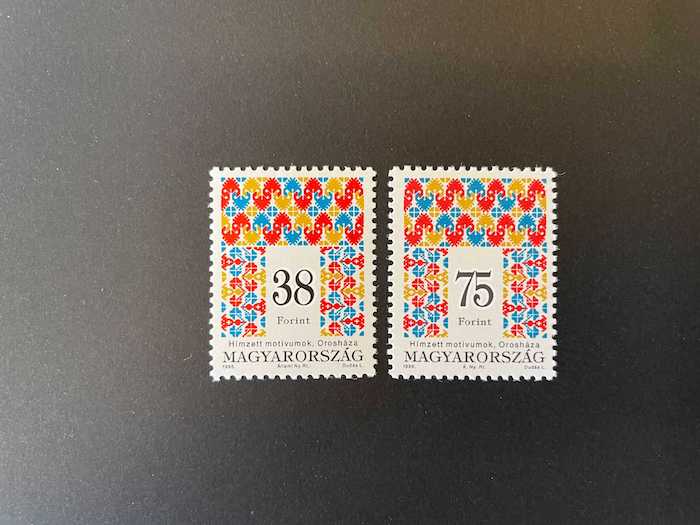
38 Forint
Issued 1995: an embroidery motif from Orosháza, a town also known as a tourist destination.
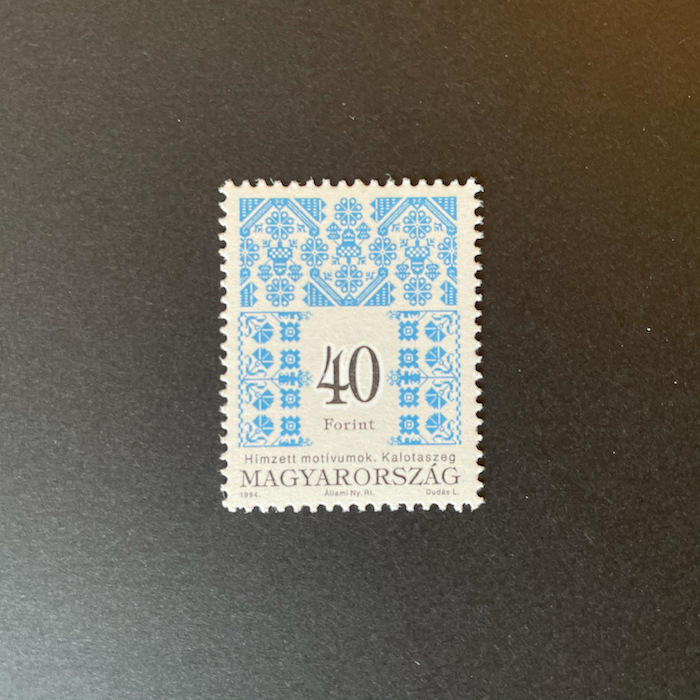
40 Forint
Issued 1994: an embroidery motif from Kalotaszeg.
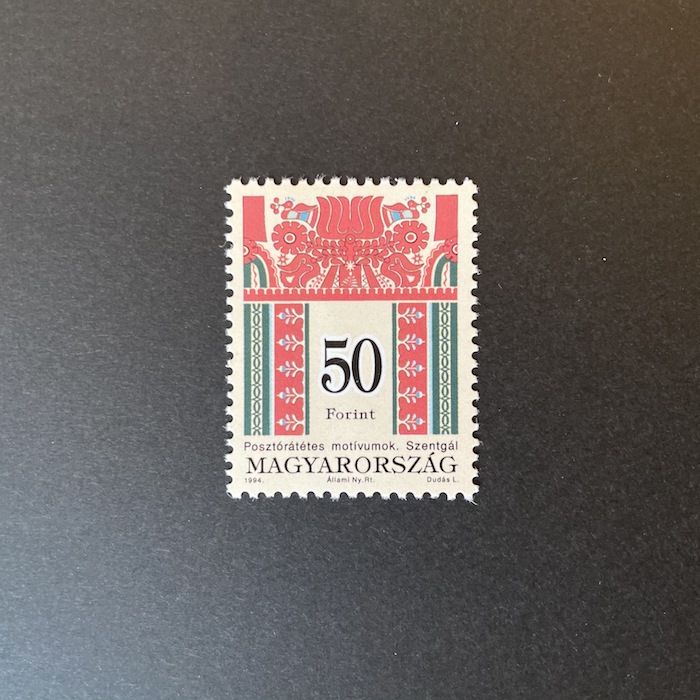
50 Forint
Issued 1994: an embroidery motif from Szentgál.
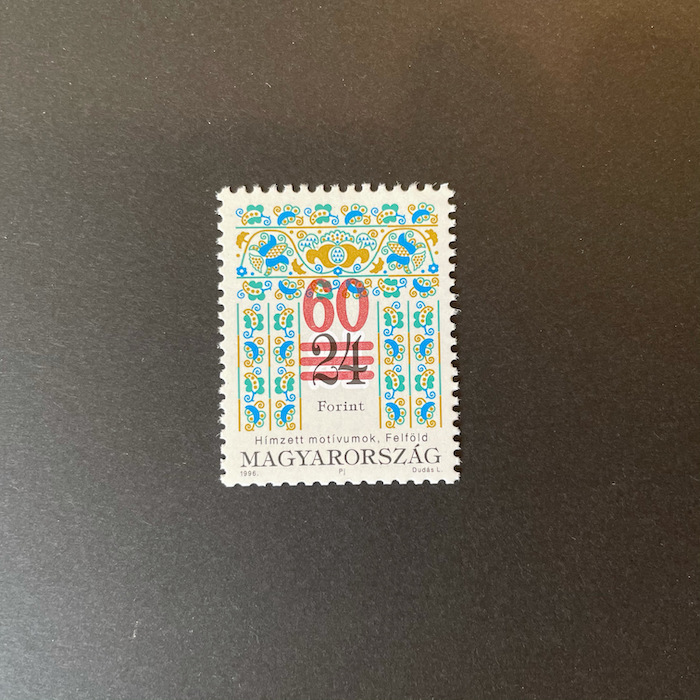
60 Forint
Issued 1997: the 24 Ft stamp of 1996 was surcharged to 60 Ft. The 1990s aren’t that long ago — I’d love to know why they chose to surcharge it!
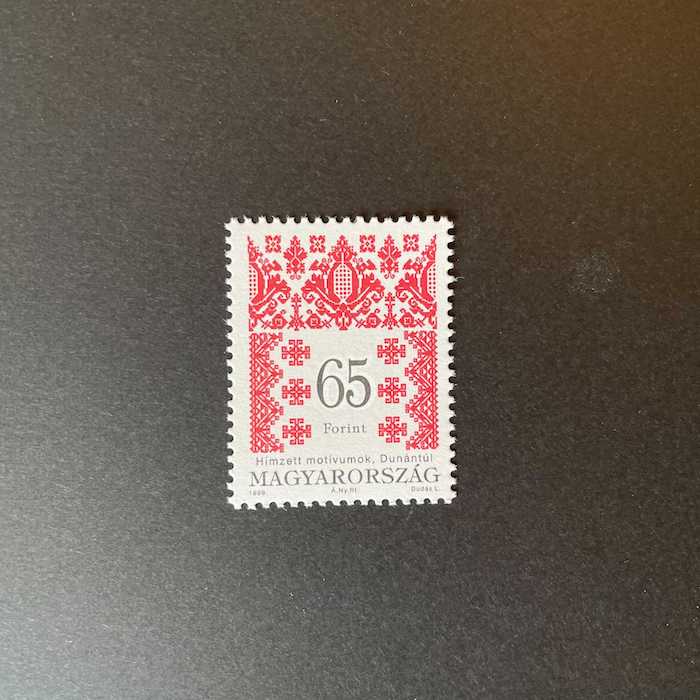
65 Forint
Issued 1999: an embroidery motif from Dunántúl (Transdanubia), which appears three times, on the 17 Ft, 35 Ft and 65 Ft.
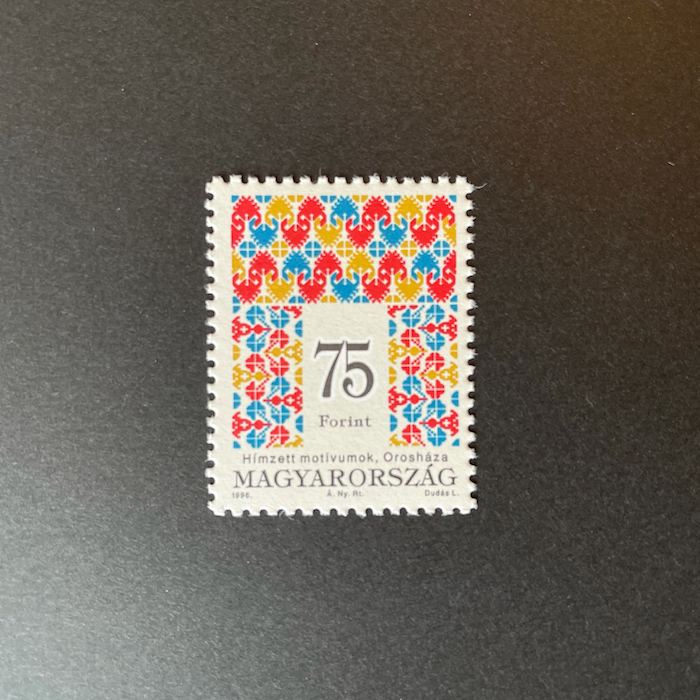
75 Forint
Issued 1996: an embroidery motif from Orosháza, which appears twice, along with the 38 Ft.
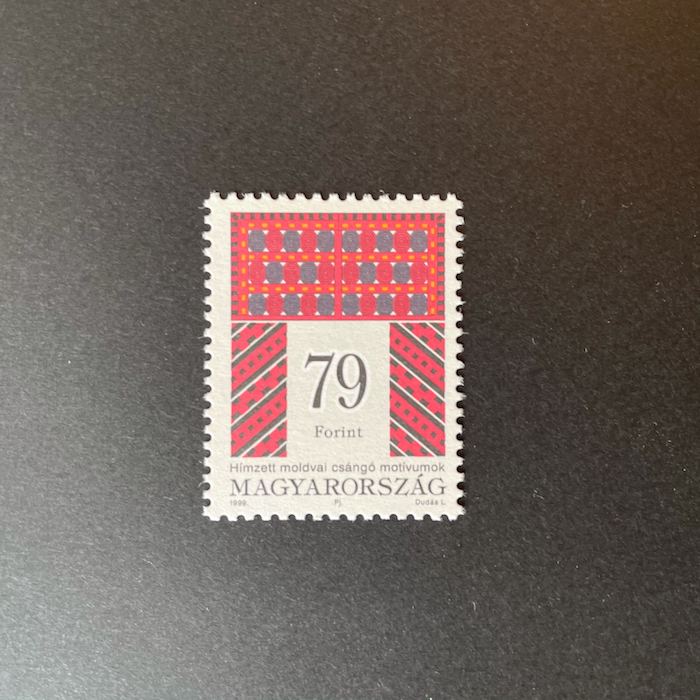
79 Forint
Issued 1999: an embroidery motif of the Csángó people. Only the 79 Ft has an unusual inscription.
The others read “Hímzett motívumok – [place name],” but the 79 Ft reads “Hímzett – [region] – [people] – motívumok.”
The Moldavian Csángó (moldvai csángó) are a Hungarian ethnic minority. The design has quite a different feel from the other embroidery motifs.
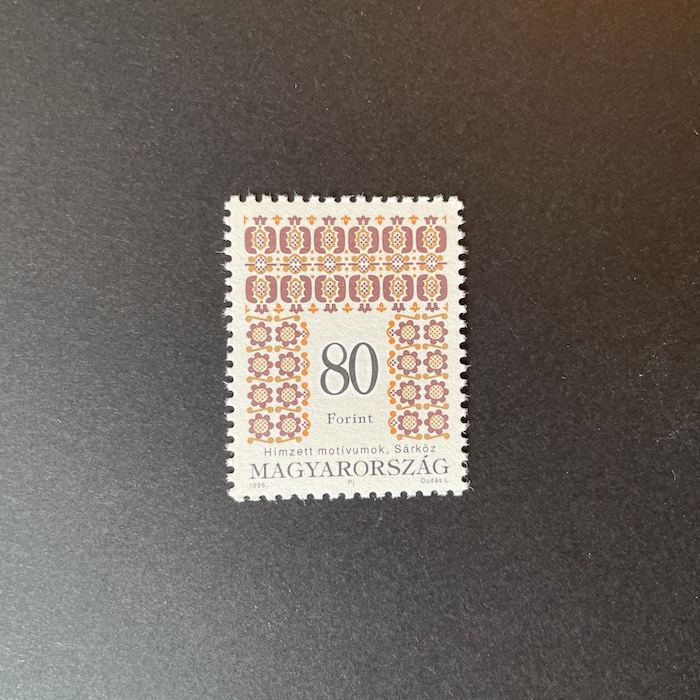
80 Forint
Issued 1996: an embroidery motif from Sárköz — its second appearance after the 14 Ft.
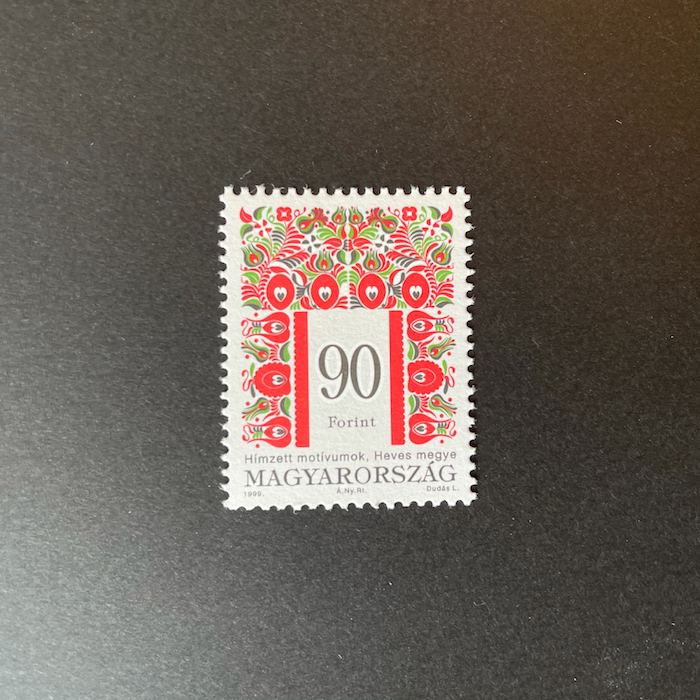
90 Forint
Issued 1999: an embroidery motif from Heves County — its second appearance after the 22 Ft.
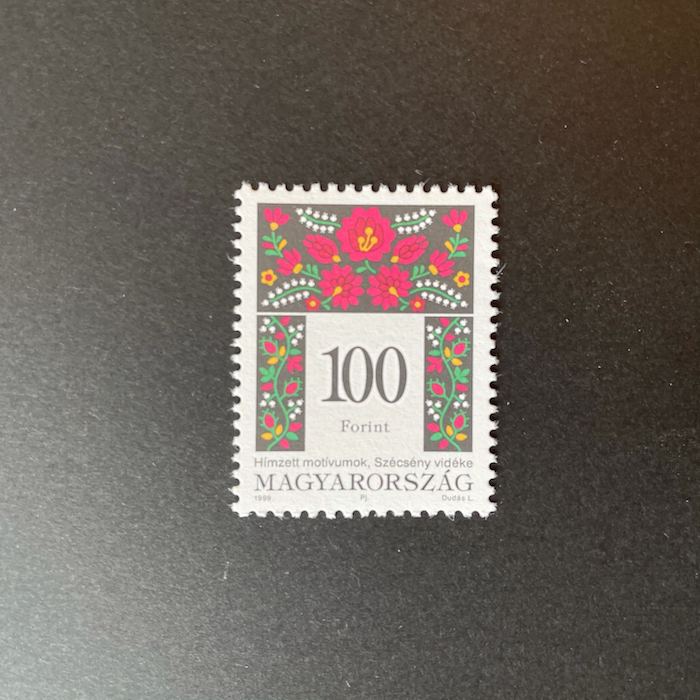
100 Forint
Issued 1999: an embroidery motif from Szécsény.
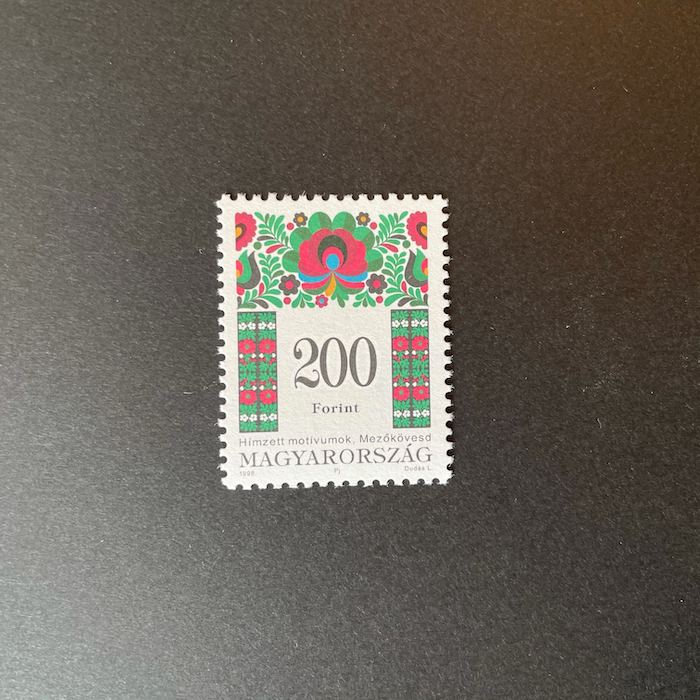
200 Forint
Issued 1998: an embroidery motif from Mezőkövesd in northern Hungary.
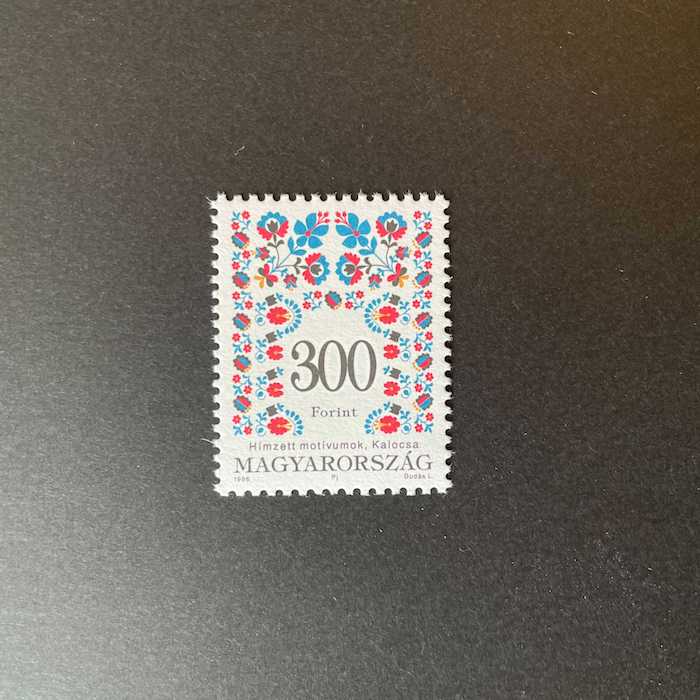
300 Forint
Issued 1996: an embroidery motif from Kalocsa, which appears three times, on the 19 Ft, 24 Ft and 300 Ft.
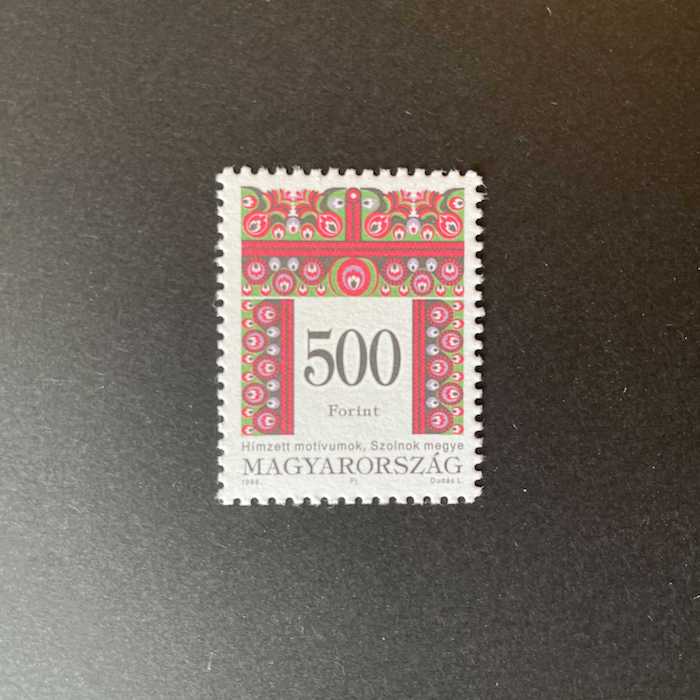
500 Forint
Issued 1996: an embroidery motif from Szolnok in central Hungary.
The Embroidery Stamps, Grouped Together
Grouped by County or Village (Areas with Two or More Stamps)
Stamps from the same area use the same motif (except Vas), but the position of the face value, the paper and the shade of the colors differ slightly. Try comparing them!
Grouped by Year
What did you think of Hungary’s embroidery motif stamps?
Looking at them one by one, I came to appreciate how lovely this series really is.
If I learn more about the Hungarian embroidery motifs or the regions, I’ll add it here.
Some of the stamps shown are from a private collection. Items available for purchase are those listed in the shop only.
This blog covers stamp designs and art from around the world. Follow us on social media for daily stamp art and gallery visits!
Twitter: @postio_marche
Instagram: mylittleart_studio
Online stamp shop: Postio Marche
Comments