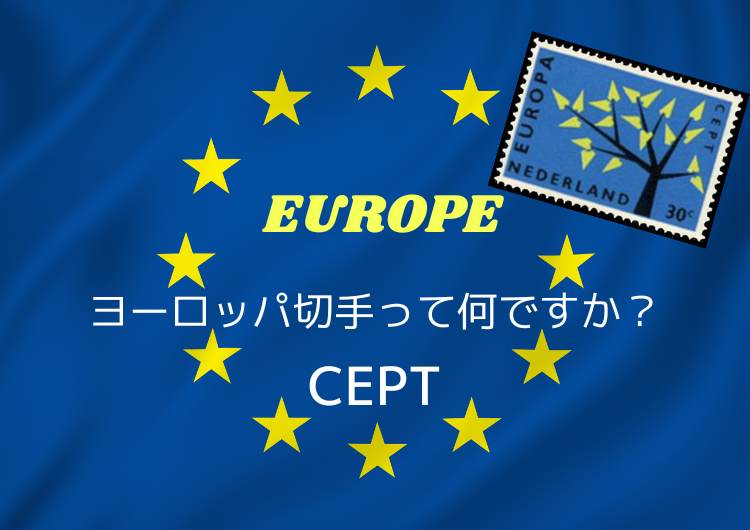
“Are EUROPA stamps just stamps issued in Europe?”
The term “EUROPA stamps” is familiar to philatelic enthusiasts, but detailed English-language resources have been surprisingly hard to find. Let me introduce you to the wonderful world of EUROPA stamps!
What Are EUROPA Stamps?
EUROPA stamps are a series of stamps issued by member countries of European postal organizations, all sharing a common annual theme.
The story begins in 1952, when France proposed the formation of the European Coal and Steel Community (ECSC). Four years after the ECSC was established, on September 15, 1956, member countries issued stamps with a unified design to celebrate European integration.
The founding six member countries in 1956 were: France, West Germany, Italy, the Netherlands, Belgium, and Luxembourg.
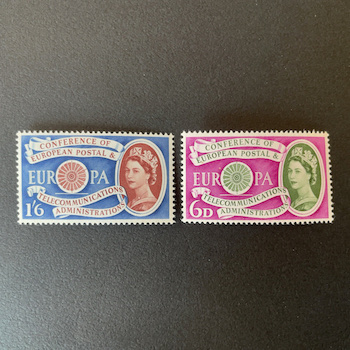
In 1959, the Conference of European Postal and Telecommunications Administrations (CEPT) was formed, and from 1960 onward, EUROPA stamps were issued under CEPT’s banner.
Since 2000, the program has been managed by PostEurop (European Postal Organisation), and it continues to this day.
- 1956–1973: Unified design (except 1957)
- 1974 onward: Unified theme with each country’s own original design
The core concept of EUROPA stamps is “European harmony.”
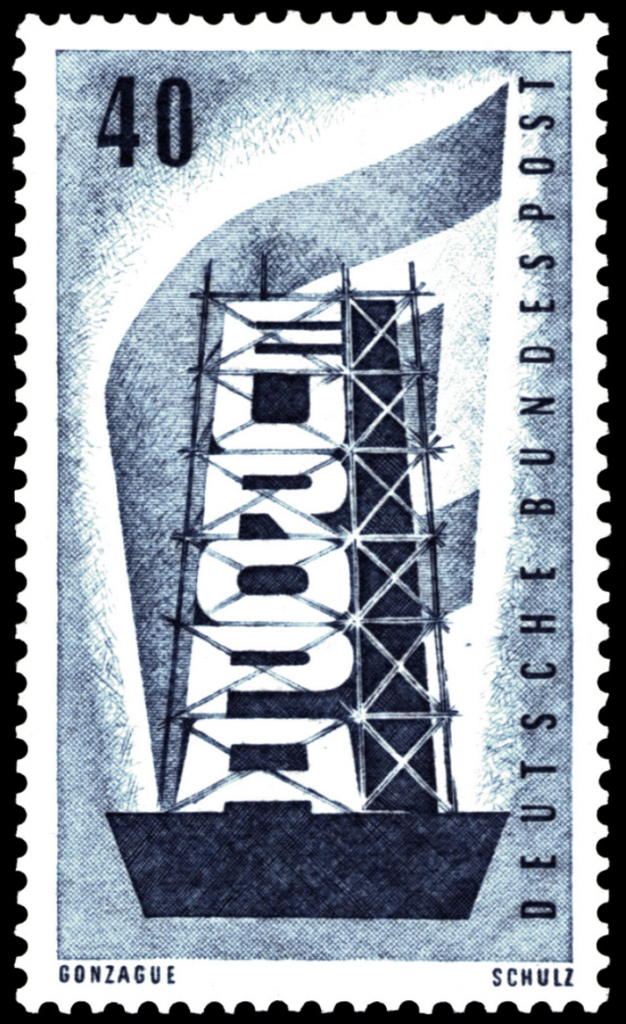
Since this stamp was issued by the ECSC, a derrick (an oil drilling tower) was used as the motif, firmly supporting the word “EUROPE” — a symbol of European cooperation. The ECSC is considered the beginning of what would eventually become the EU.
1956–1973: The Unified Design Era
During this period, all participating countries issued stamps sharing the same basic design. (1957 was an exception with free designs, before returning to the unified format the following year.)
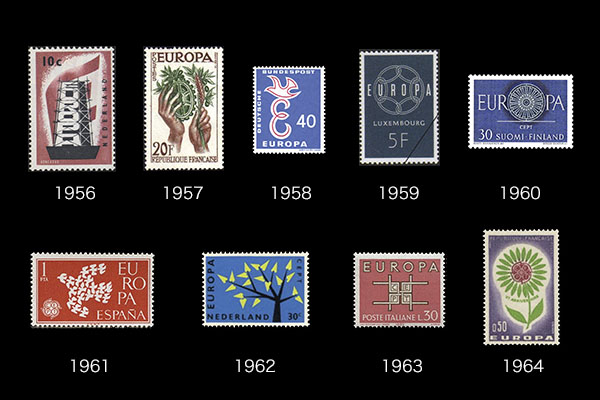
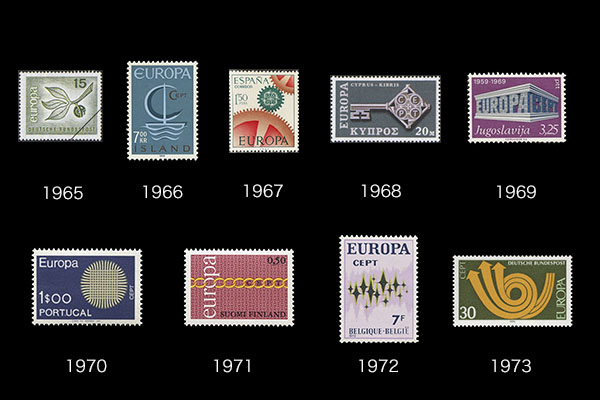
After CEPT was formed in 1959, stamps issued from 1960 onward began incorporating the CEPT letters or logo.
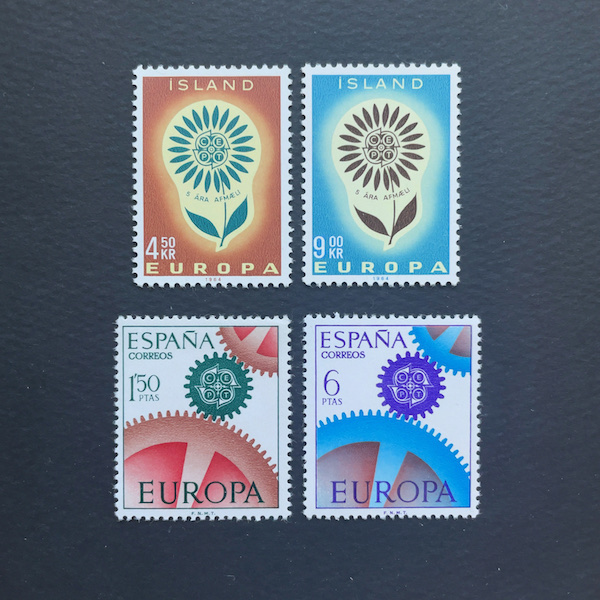
EUROPA stamps were often issued in pairs using complementary colors — warm tones paired with cool tones — which I imagine was also a way to express cooperation between nations.
While the unified design was the standard, some countries added their own creative flair.
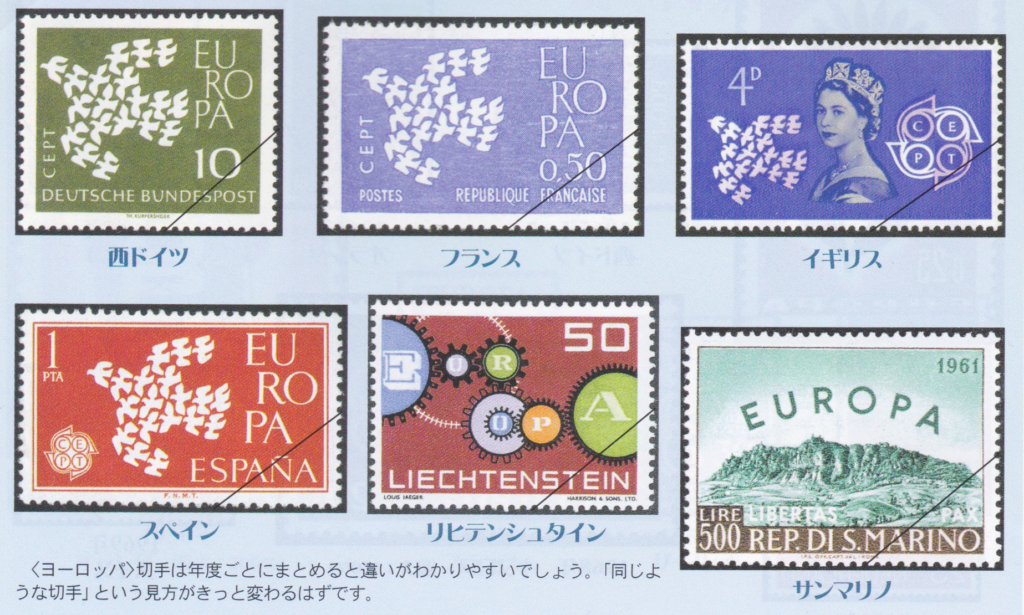
In 1961, Spain used the standard design, but the UK featured the Queen’s portrait, while Liechtenstein and Monaco took quite different visual approaches.
1974–1984: The Unified Theme Era
From 1974, CEPT chose a shared theme each year while leaving the design entirely up to each country.
| Year | Theme |
|---|---|
| 1956–1973 | Unified Design (except 1957) |
| 1974 | Sculpture |
| 1975 | The Painter’s Art |
| 1976 | Arts and Handcraft |
| 1977 | Landscapes |
| 1978 | Monumental Buildings |
| 1979 | History of Posts and Telecommunications |
| 1980 | Famous Persons |
| 1981 | Folklore |
| 1982 | Historical Events |
| 1983 | Great Achievements |
| 1984 | Anniversary of CEPT (Unified Design) |
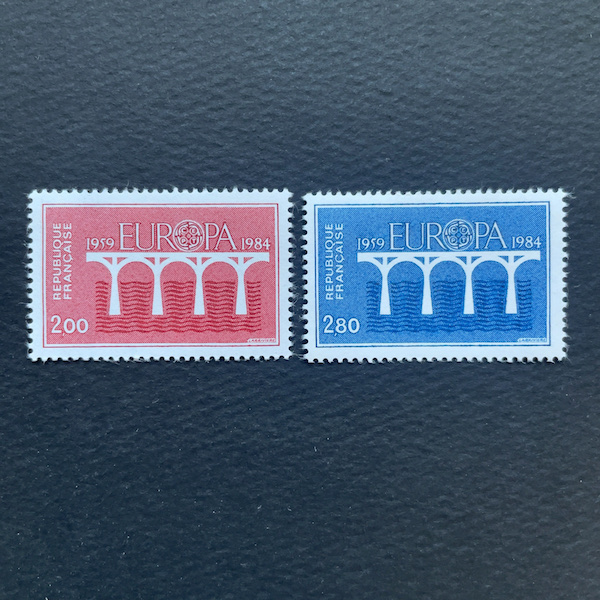
In 1984, to celebrate the 25th anniversary of CEPT, a unified design made a return — featuring a bridge with the EUROPE and CEPT logos.
1985–1999: EUROPA Stamp Themes
| Year | Theme |
|---|---|
| 1985 | European Music Year |
| 1986 | Protection of Nature and Environment |
| 1987 | Modern Architecture |
| 1988 | Transport and Communication |
| 1989 | Toys |
| 1990 | Post Office Buildings |
| 1991 | Europe in Space |
| 1992 | The Discovery of America |
| 1993 | Contemporary Art |
| 1994 | Discoveries |
| 1995 | Peace and Liberty |
| 1996 | Famous Women |
| 1997 | Stories and Legends |
| 1998 | National Festivals |
| 1999 | National Parks |
Once countries started creating their own designs, the variety became wonderful.
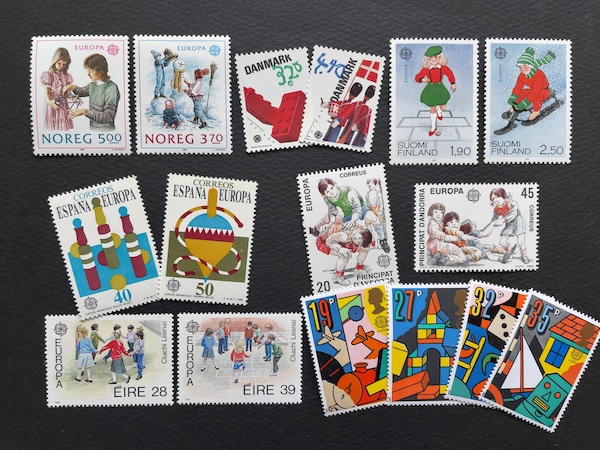
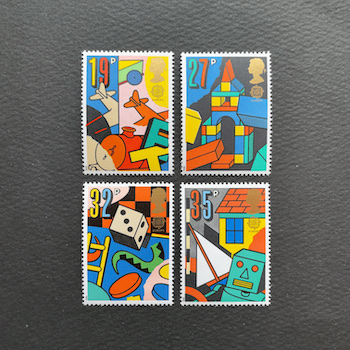
By the 1980s, British stamps typically came in sets of 4–5. While most countries issued EUROPA stamps in pairs, the UK went its own way and issued a set of four. As always, there’s no country name or year printed — but the CEPT mark appears beneath the Queen’s portrait, confirming participation in the series.
The fall of the Berlin Wall in 1989 and the collapse of the Soviet Union in 1991 had a profound impact on EUROPA stamps. Membership grew from 34 countries in 1990 to 50 by 1996, with 15 of those new additions coming from Eastern Europe.
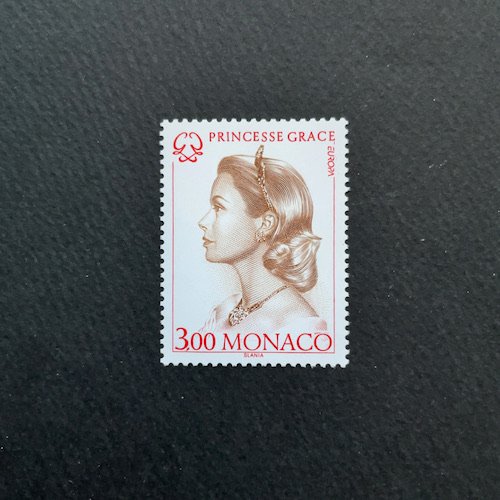
The 1996 theme “Famous Women” — with each country choosing a representative woman — felt like a landmark moment.
2000 Onward: EUROPA Stamp Themes
| Year | Theme |
|---|---|
| 2000 | Europe 2000 (Unified Design) |
| 2001 | Water |
| 2002 | Circus |
| 2003 | Poster Art |
| 2004 | Tourism |
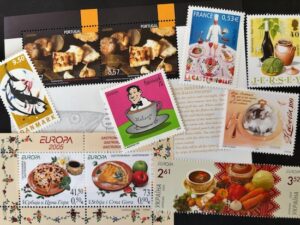
| 2005 | Gastronomy |
| 2006 | Symbiosis |
| 2007 | Scout |
| 2008 | Letter |
| 2009 | Astronomy |
| 2010 | Children’s Books |
| 2011 | Forest |
| 2012 | Sightseeing |
| 2013 | Mail Car |
| 2014 | Music |
| 2015 | Old Toys |
| 2016 | Ecology |
| 2017 | Castle |
| 2018 | Bridge |
| 2019 | National Bird |
| 2020 | Old Postal Route |
| 2021 | Endangered Species |
| 2022 | Stories and Myths |
| 2023 | Peace – The Highest Value of Humanity |
| 2024 | Underwater Fauna and Flora |
| 2025 | National Archaeological Discoveries |
| 2026 | 70th Anniversary of the EUROPA Stamp |
For the Millennium year 2000, a unified design featuring stars and children was chosen.
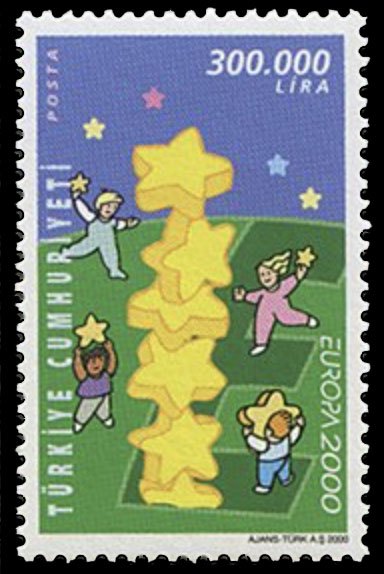
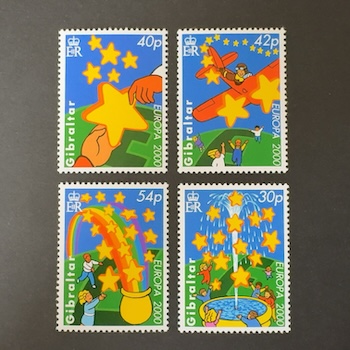
Even with a unified design in 2000, some countries like Gibraltar added their own charming twist. Fun!
From 2000 onward, PostEurop took over responsibility for setting EUROPA themes, and a new EUROPA logo was introduced.

In the 21st century, themes became more varied and accessible — environmentally conscious topics like “Water” (2001), fun themes like “Circus” (2002) and “Gastronomy” (2005), and artistic themes like “Poster Art” (2003).
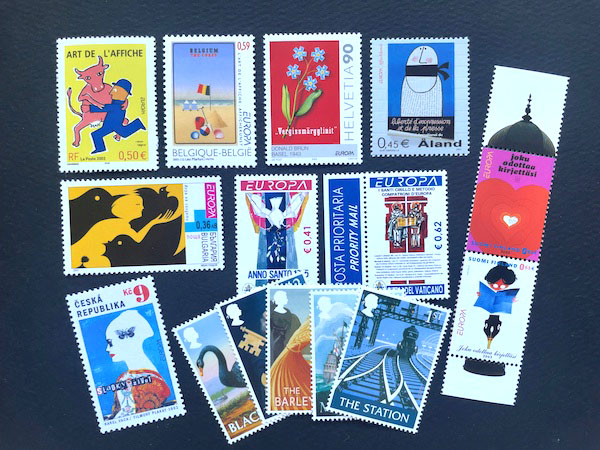
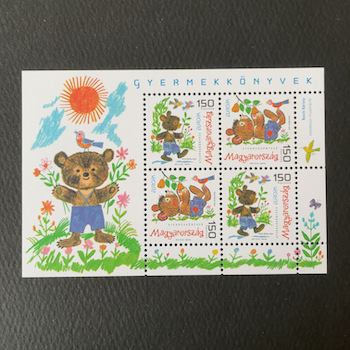
Countries like Portugal and Hungary also issued beautiful miniature sheets, adding even more to the collecting experience.
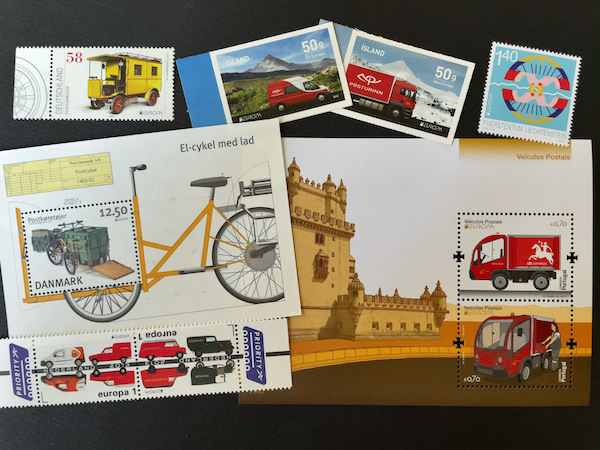
The 2013 theme “Mail Car” featured a delightful variety of postal vehicles — each country’s unique design makes it a wonderful theme to collect!
2023: Peace — The Highest Value of Humanity
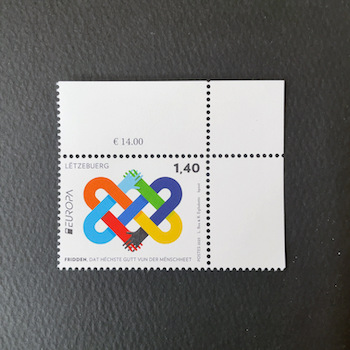
The 2023 EUROPA stamps had an unexpected story behind them. The originally planned theme “Underwater Fauna and Flora” was postponed, because Ukraine Post proposed to PostEurop that the theme be changed to “Peace — The Highest Value of Humanity.” The proposal was approved at the board meeting in April 2022.
PostEurop invited member countries to submit unified design proposals, and Luxembourg’s “Peace Knot” was chosen by vote.
The Peace Knot was inspired by the Celtic love knot, expressing peace through a heart symbolizing life, combined with rainbow colors representing nations, cultures, aspirations, and diversity.
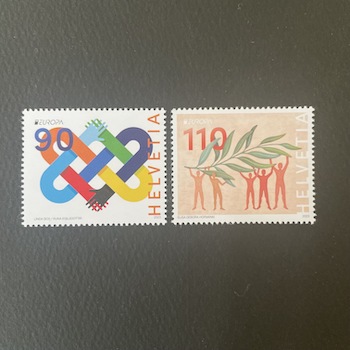
Some countries like Switzerland also issued their own locally designed stamps alongside the unified design.
The wish for peace is universal. One of the joys of EUROPA stamps is the way philately connects us across the world — all coming together with one heart.
2026: The 70th Anniversary of EUROPA Stamps
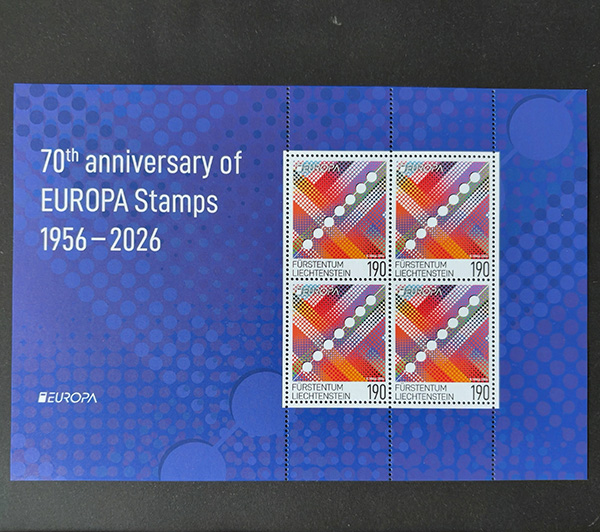
EUROPA stamps began in 1956, which means 2026 marks their 70th anniversary!
To celebrate this milestone, the 2026 theme is “70th Anniversary of the EUROPA Stamp.”
Most EUROPA stamps are issued between spring and summer, so there’s much to look forward to as new designs emerge throughout the year!
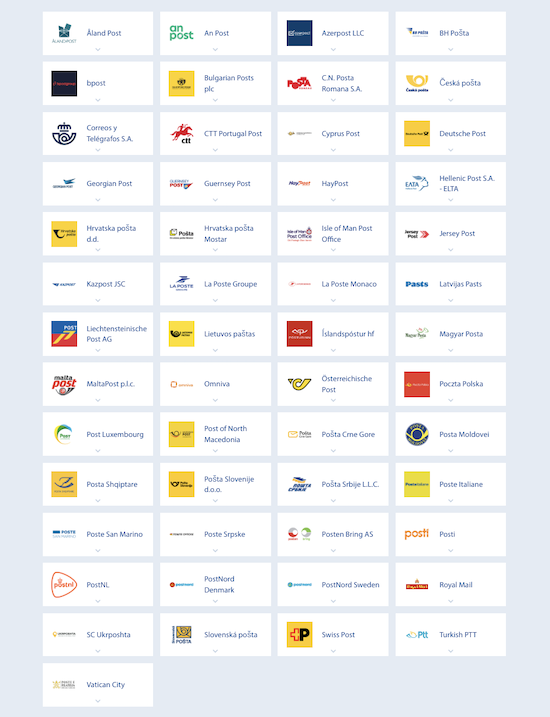
What began with 6 countries in 1956 has grown: as of 2026, 53 countries are members of PostEurop.
Postio Marche has been selling EUROPA stamps since the very beginning. We continue to add new items regularly — please come and explore!
Postio Marche — EUROPA Stamps Collection
Images and text are original. Please do not reproduce without permission. Some stamps shown are from a private collection.